Wood selection
Three premium hardwoods, and an honest word about each
These are the species we keep on hand, milled and dried on our own equipment. Pick the one that suits the room, not the one that sounds most expensive.
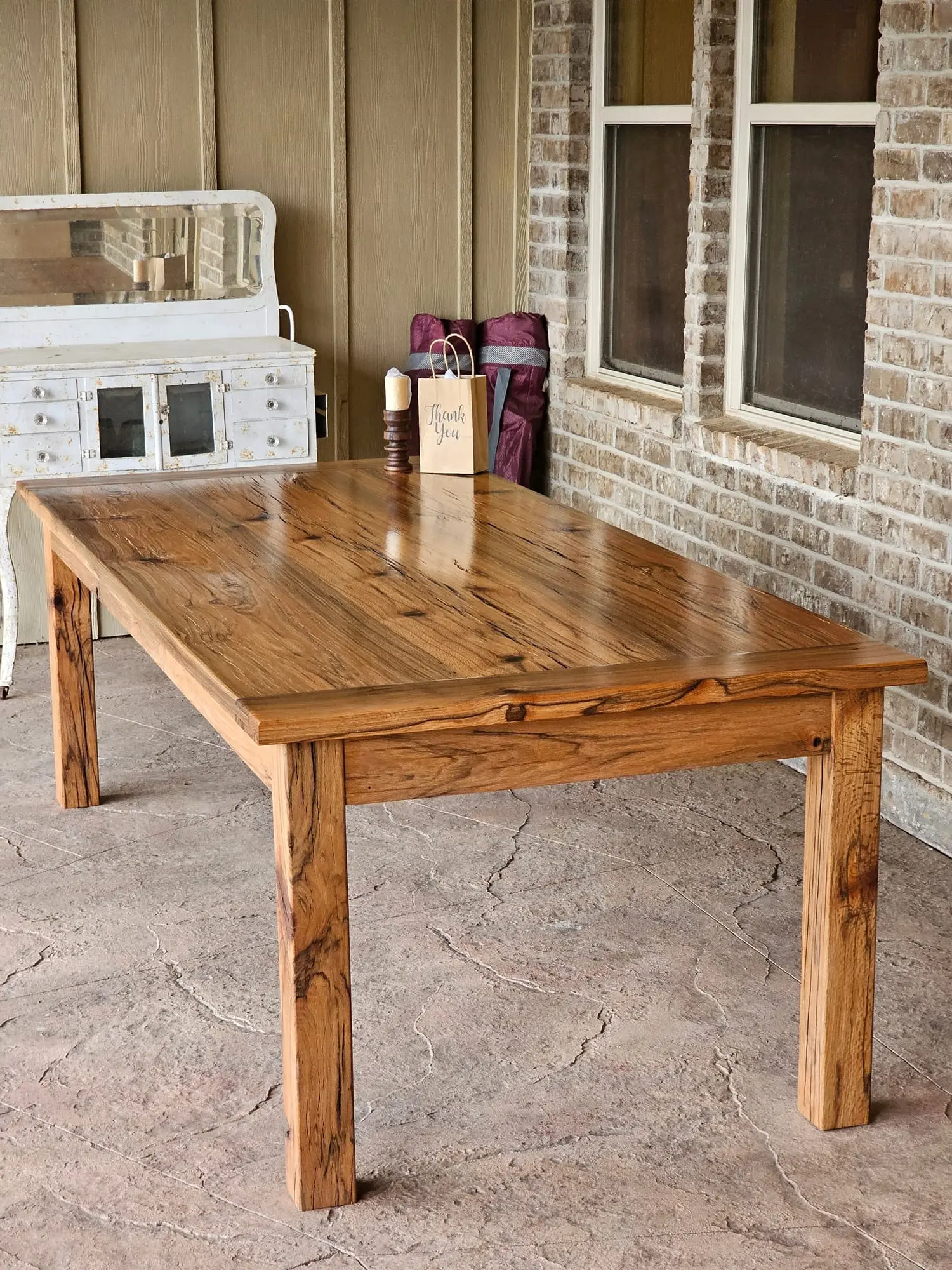
Our standard choice
Red Oak
“Very durable and provides incredible grain patterns.”
Red oak has a rose undertone that sits quietly in the raw board and then comes out once stain goes on. It is the reason an oak top can read warm where a maple top reads cool.
Darker stains sink into this wood beautifully. The open pores take pigment deep, so the grain lines get darker than the field around them and the whole pattern lifts.
It is the species most of our tables are built in, and the one we would steer you toward if you want a top that looks like wood from across the room.
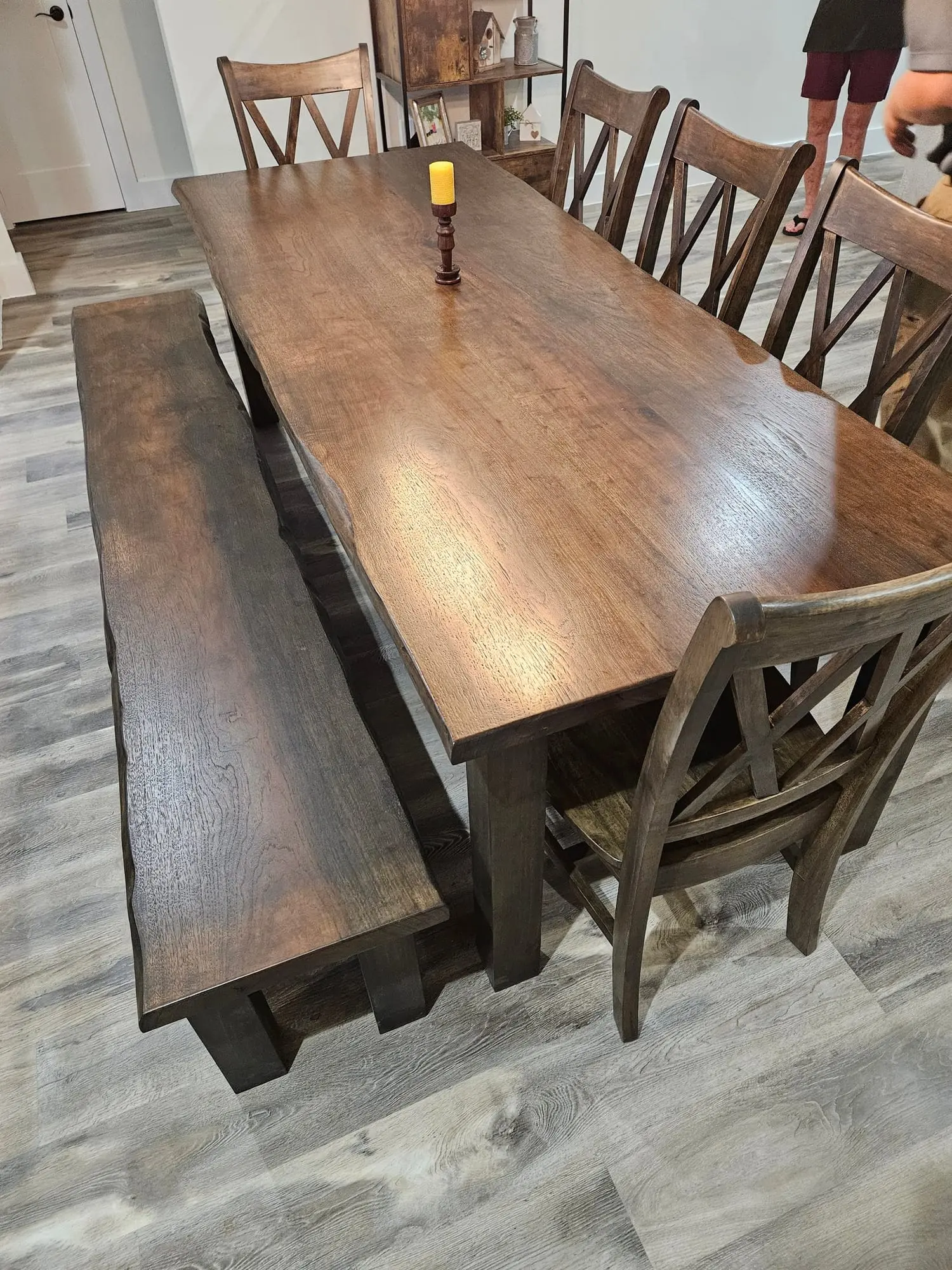
The showpiece
Black Walnut
“Dark, hard, dense and tight-grained.”
Prized by woodworkers for its strength, grain and color. It is the wood people reach for when the piece is meant to be the thing you notice when you walk in.
The color is in the wood itself, chocolate through to purple-brown, so it needs very little help from a stain. Most walnut tops we build get a clear finish and nothing else.
Tight grain means a smoother surface off the sander and a top that shows fingerprints and crumbs less than an open-pored species.
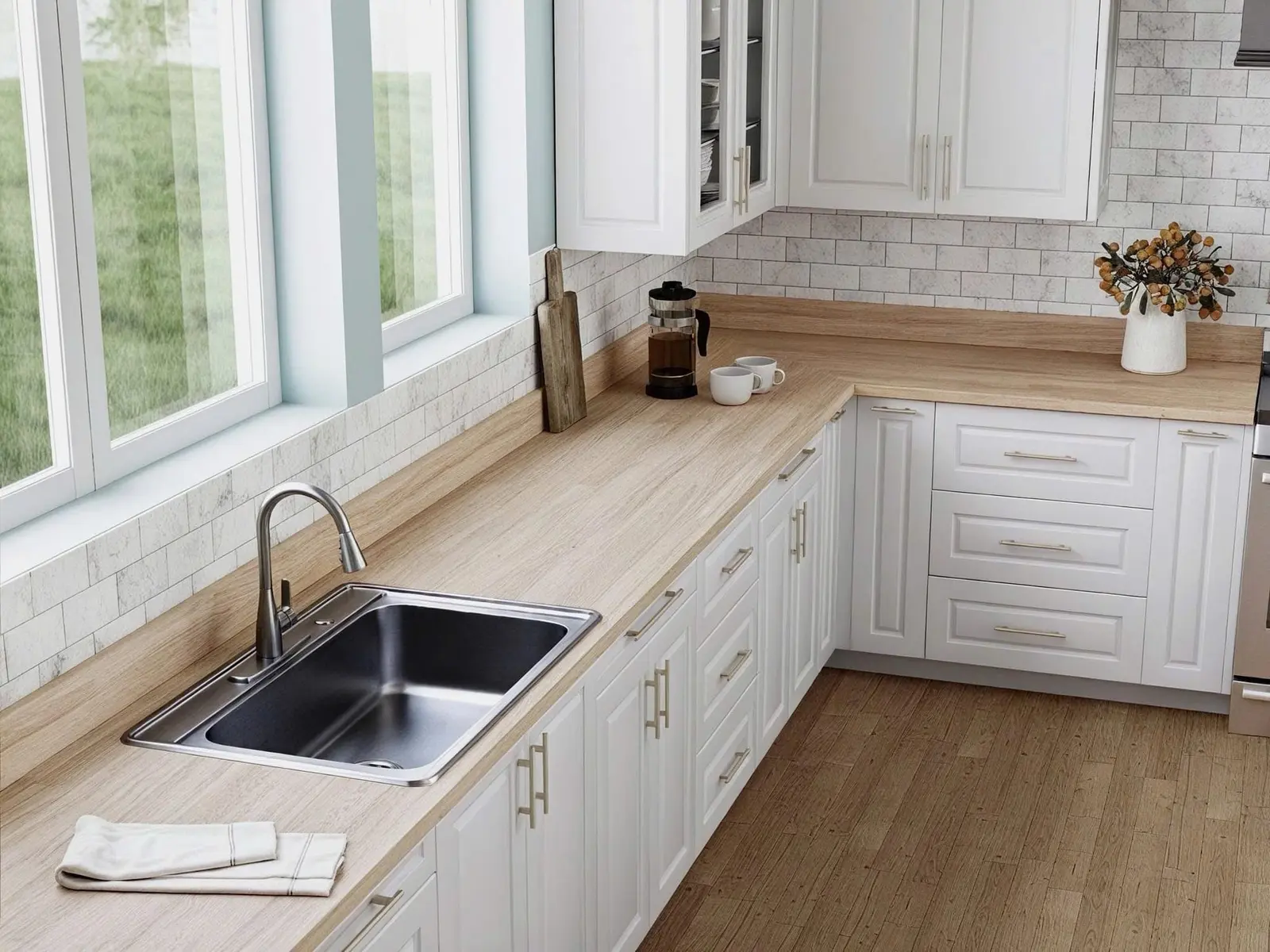
The clean one
Hard Maple
“Incredibly smooth and creamy.”
Minimal wood grain and impressive durability. If you want a surface that reads calm and modern rather than rustic, this is it.
It is the hardest of the three by a clear margin, which is why it is the traditional choice for butcher block and countertops that get worked on daily.
Because the grain is so fine and the pores so tight, stain sits closer to the surface. Light and natural finishes suit it best; heavy dark stains can go blotchy on maple, and we will tell you if that is where you are headed.
Side by side
The honest comparison
No species wins every row. Find the row you actually care about and choose from there.
Janka numbers are a useful shorthand, but in a dining room the difference between these three is smaller than the difference between a house with kids and a house without. All three will outlive the finish on them, and a finish can be renewed.
Beyond the three
We run our own mill, so the list is not the limit.
Pecan, mesquite, cedar, elm, ash, cherry, hackberry. If it grows around here and it is worth milling, we can mill it. Because we cut and dry our own lumber, a species we do not stock is a scheduling question rather than a two-year wait on an air-dry stack.
Have a tree of your own you want the table made from? That is a Legacy Project.
Still torn?
Come to the showroom at 4882 CR 3735, Wolfe City and put your hand on all three with your stain samples in the same light. It takes about ten minutes and settles it almost every time.
Cannot get out here? Call or text 972-837-6974 and tell us what your floors and cabinets are, and we will tell you which of the three fights with them.