From Standing Tree to Finished Table: What Happens at Our Sawmill
Most furniture shops buy lumber. We make ours. Here is the whole road from a standing tree to a finished table, and why the drying step matters most.
September 10, 2026 · 7 min read
Most furniture shops start their story at the lumber rack. Somebody else felled the tree, somebody else sawed it, somebody else dried it, and a truck backed up to the door.
Ours starts with a tree on the ground.
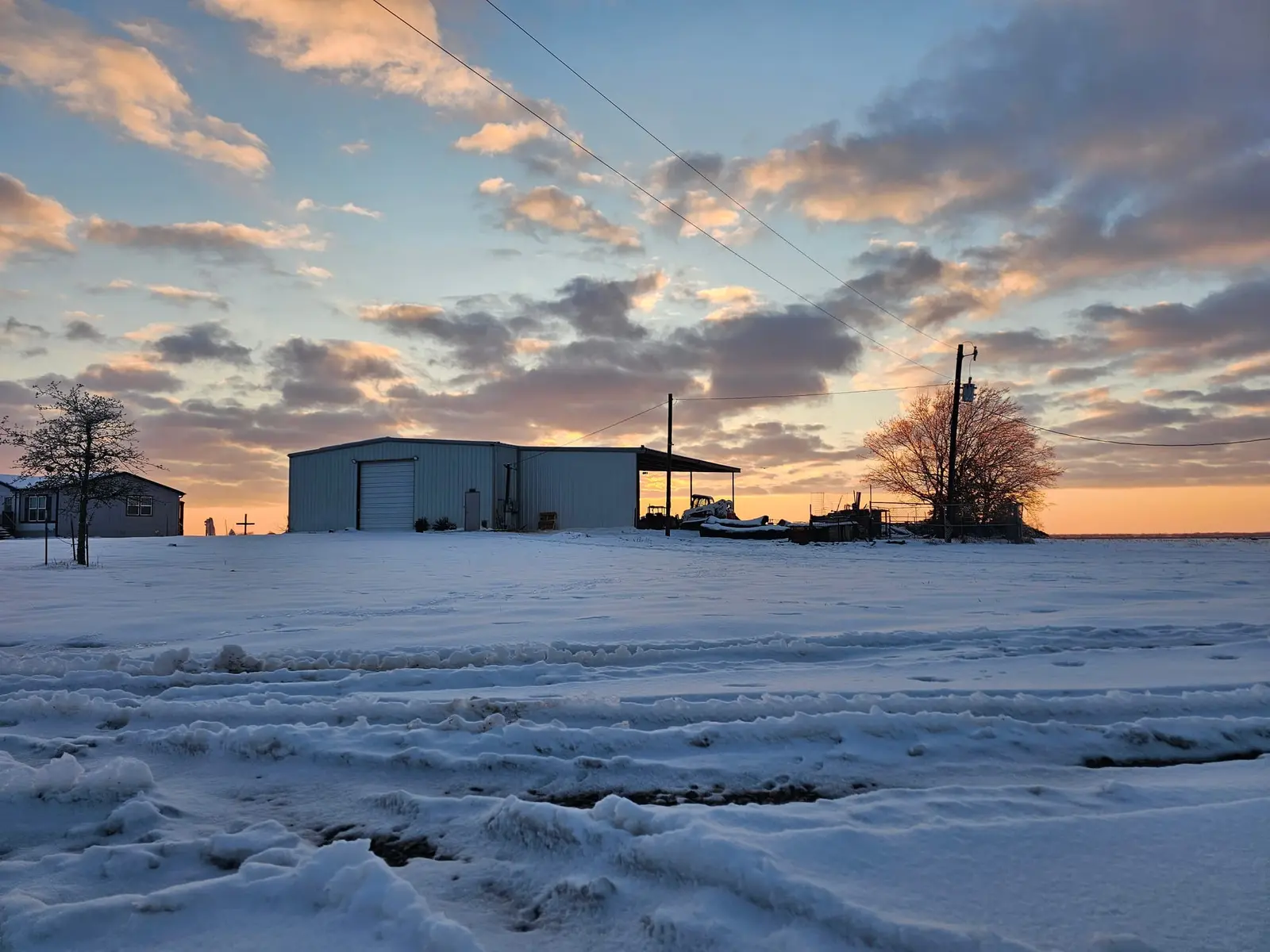
We run a real sawmill out here at 4882 CR 3735 in Wolfe City, about an hour and fifteen minutes northeast of Dallas. We mill our own lumber, dry it in our own vacuum kiln, and build furniture out of it in the same shop. When a customer asks where the wood in their table came from, we can usually tell them the county.
Step one: the log
A log is not lumber. A log is a question.
Before a blade ever touches it, we are reading it. Where did it grow, and how? A yard tree that stood alone in the open grows wide and branchy, with a lot of tension in it and a lot of character. A tree from the middle of a stand grows tall and straight and gives up cleaner, more uniform boards.
We look for the obvious problems too. Embedded fence staples. A nail from a deer stand somebody put up in 1994. Rot at the butt end. Mud and grit in the bark, which will dull a band faster than the wood ever will.
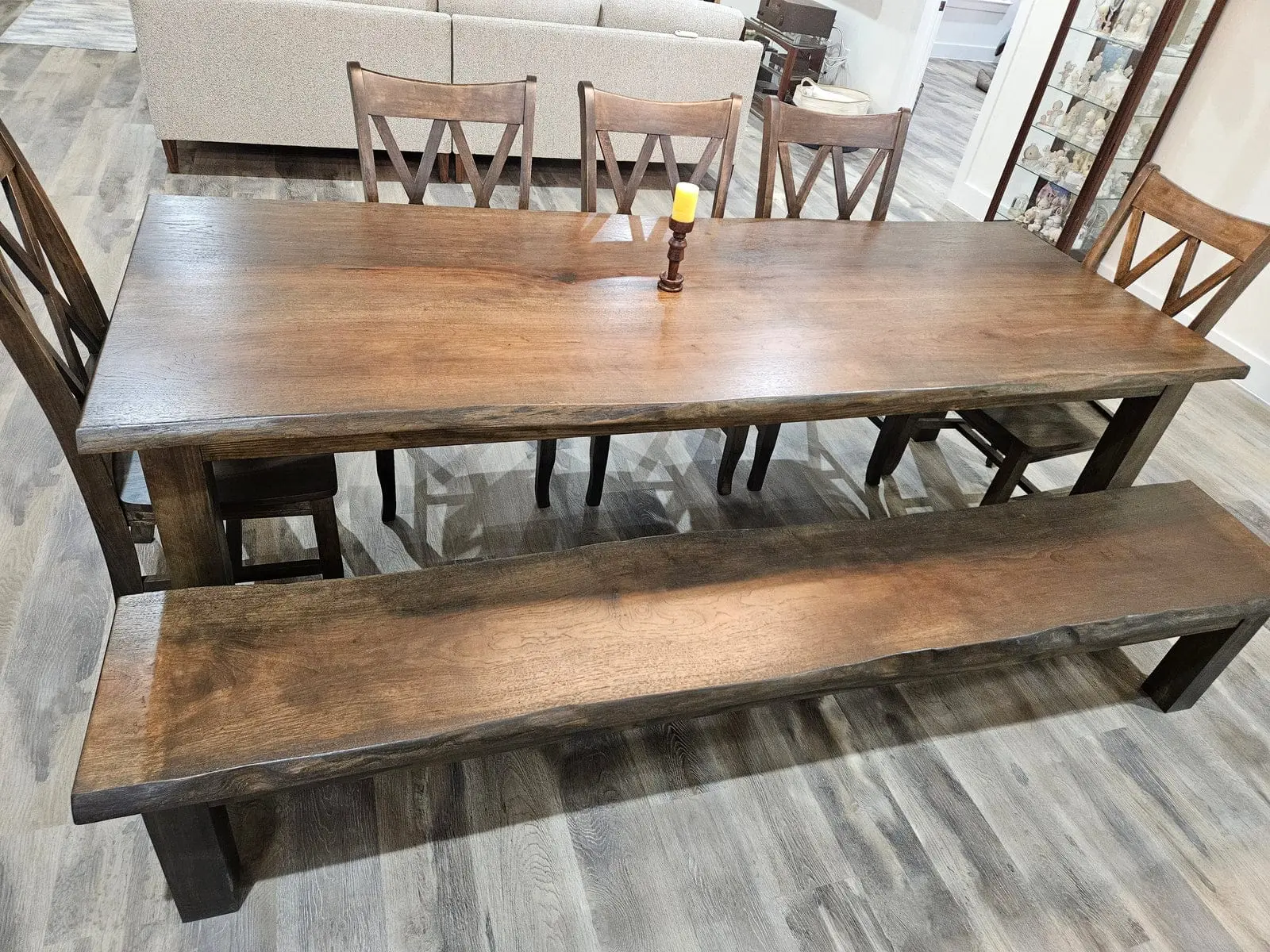
Then we decide how to cut it. Slabbing straight through the middle gives us full-width live edge slabs with the pith running down the center, and those become dining tables and conference tables. Quartersawing gives us narrower boards with straighter grain, more stability, and in white oak that beautiful ray fleck. Most logs give us some of both.
Step two: the saw
Milling is the fast part. It is also the part everybody wants to watch, and we understand why. There is nothing quite like the first cut opening a walnut log and seeing the color come up out of the dark.
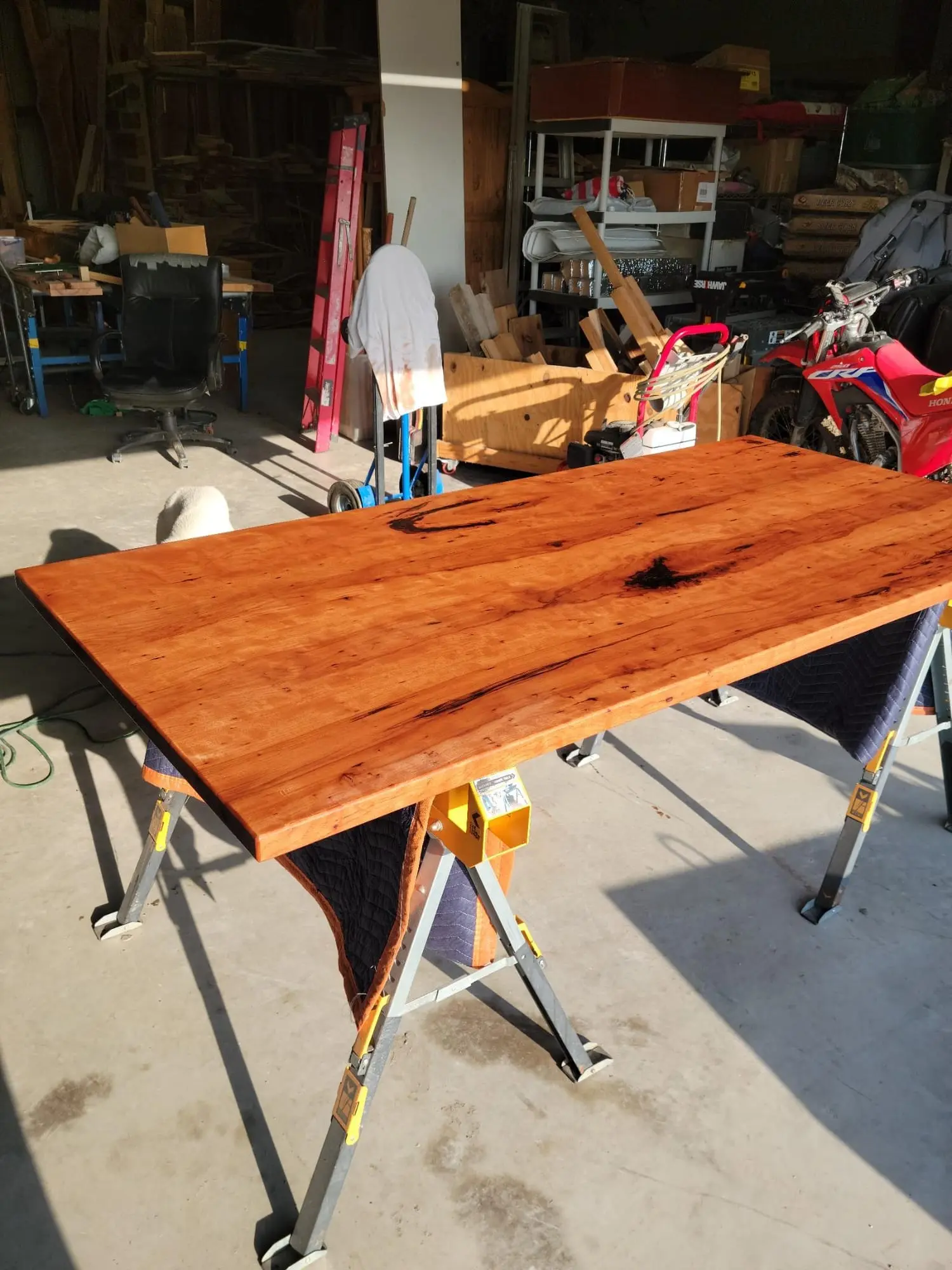
We cut oversize on purpose. A slab that is going to finish at 1 3/4 inches gets cut closer to 2 1/4. Wood moves as it dries, and it almost never dries flat on its own. That extra thickness is our insurance policy so we can flatten it later and still have a substantial top.
Fresh off the saw, the boards get stickered. That means stacking them with thin strips of wood between every layer so air can move through the pile. Sticker them wrong and you get stain, mold, and boards that dry into a permanent twist. It is boring work that decides whether the whole log was worth cutting.
Step three: drying, which is the whole ball game
Here is the part most people skip past, and it is the part that determines whether your table is still flat in ten years.
Green wood off the saw can run 60, 80, sometimes over 100 percent moisture content. A table built for a heated and cooled house in Texas needs to be down around 6 to 8 percent. Getting from there to here is not optional and it is not fast.
Air drying is the old way. The rule of thumb is roughly a year per inch of thickness, which means a 2 inch walnut slab sits in a barn for two years, and even then it only comes down to whatever the outdoor humidity allows. That is not dry enough for an indoor table in a house with central heat.
We use a vacuum kiln. The idea is simple physics. Drop the pressure inside the chamber and water boils at a much lower temperature. So instead of cooking moisture out of the wood with high heat, which is what stresses and honeycombs and case hardens a thick slab, we pull it out gently at low temperature.
What that buys you:
- Speed. Weeks instead of years, even on thick slabs.
- Color. Walnut keeps its rich brown instead of going flat and gray the way it can in a hot conventional kiln.
- Fewer defects. Less checking, less honeycombing, less internal stress waiting to spring loose the moment we rip a board.
- Bugs and larvae do not survive the process. That matters more than people think when you are bringing a slab into your house.
We do not pull a stack because the calendar says so. We pull it when the meter says so, and we check more than one board in more than one spot.
Step four: the shop
Dry lumber comes inside and sits a while longer, acclimating to shop conditions. Then it gets flattened, cut to size, jointed, glued up, and built.
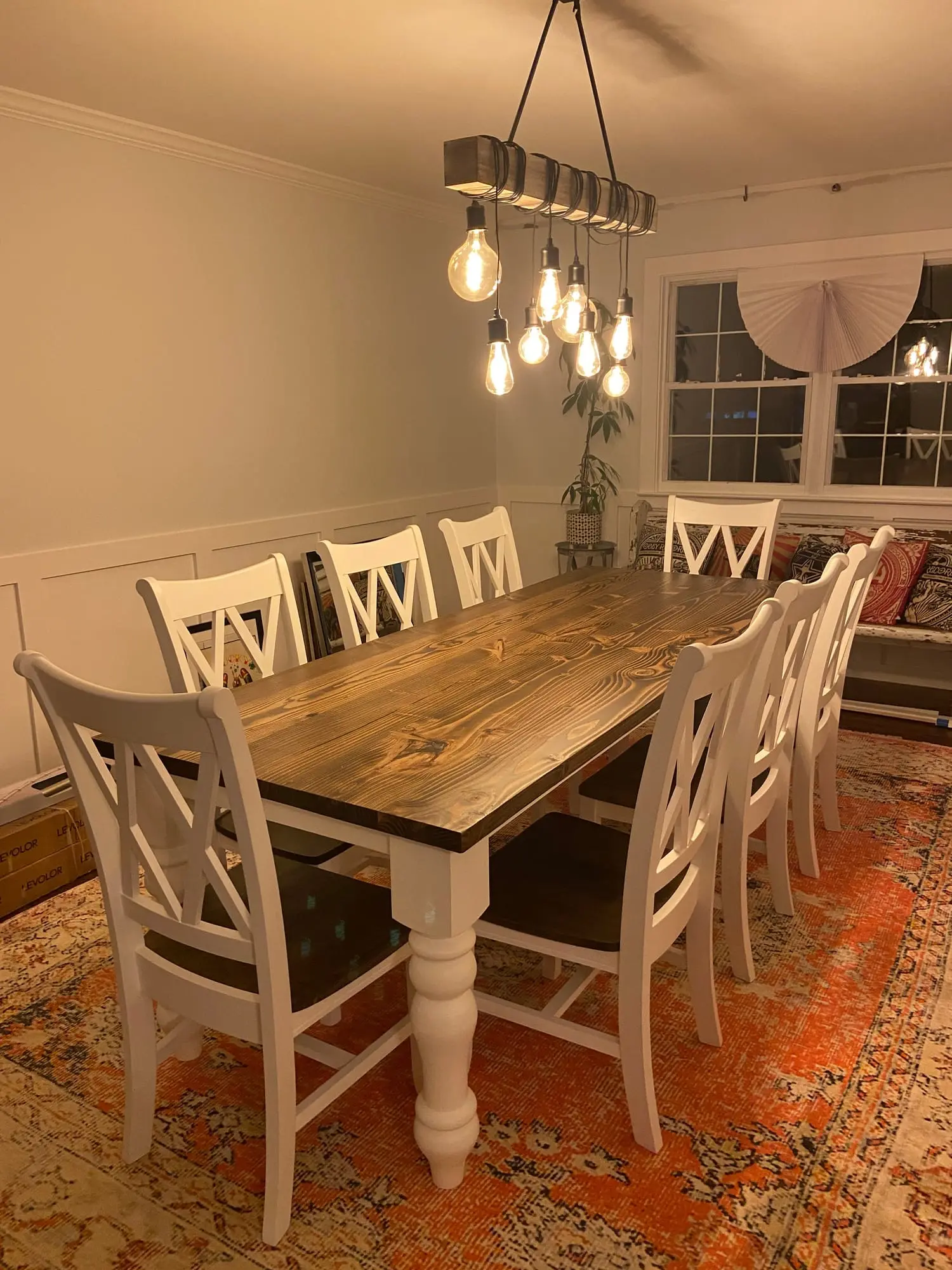
That is where Owen does most of his damage. He spent better than ten years in construction before this, and it shows in how he thinks about structure. He builds dining tables the way you would build something meant to hold weight, because that is exactly what a table is.
Daniel came to woodworking a little over ten years ago, after an event called Quest put on by Fellowship of the Sword. He will tell you it changed how he thought about making things with his hands. He still loves a hand-routed sign more than anybody ought to.
Step five: the part you see
Sanding, finishing, and the honest inspection at the end. We are looking for anything that will fail. We are not looking to erase the tree.
Open knots, a little distress, mineral streak, a place where the grain swirls and takes stain a shade darker. Those stay. That is the log talking, and we did not go to all that trouble to shut it up.
Why we bother
We could buy kiln-dried lumber off a truck like everybody else and nobody would know the difference for about two years.
But controlling the mill and the kiln means we control the moisture content, the thickness, the grain match, and the species. It means when a customer brings us a pecan tree that came down in their own pasture, we can say yes instead of sorry.
Come see it. We are open Monday through Friday, 8 to 5, and weekends by appointment. Call 972-837-6974 first so somebody is around to walk you through it, and wear boots.
While you are here
Every piece we build is made to order in your size, species, and finish, and every board in it was milled and dried here in Wolfe City. Build time runs 4–10 weeks.