What Is a Legacy Project? Turning Your Own Tree Into Furniture
You lost a tree. We can mill it, dry it, and build it into something your family keeps. Here is how a Legacy Project actually works, start to finish.
August 12, 2026 · 8 min read
The call usually sounds the same.
A storm came through. Or the pecan by the back porch finally gave up. Or somebody is selling the home place and there is a big oak in the yard that three generations climbed. The tree is down, or it is coming down, and the person on the phone cannot bring themselves to let it go to firewood.
That is a Legacy Project. Your tree, off your land, milled here, dried here, and built into furniture that goes back to your house.
We have done enough of them now to know it is rarely about the wood.
How it works
1. You call us before the tree is cut up. This is the single biggest thing. A tree service will cut a trunk into 18 inch rounds because that is what fits in a truck, and 18 inch rounds are firewood. We need logs, and we need them long. Tell whoever is doing the removal to leave the trunk in the longest sections they can handle, 8 to 10 feet if possible, and to set them up off the dirt.
2. We look at the log. Species, diameter, soundness, and metal. Old yard trees are notorious for swallowing clothesline hooks, fence staples, and nails. We can often work around it. Sometimes a log has so much steel in it that it is not worth the blades, and we will tell you straight rather than take your money.
3. We mill it. This is where we decide what your tree wants to be. A wide, low-branching yard tree wants to be live edge slabs. A tall straight one gives us dimensional lumber for a trestle table, benches, and a matching sofa table with wood left over.
4. It dries. Into the vacuum kiln. This is the long pause in the middle, and it is not something we can rush. Thick slabs take what they take. We would rather tell you twelve weeks and be right than tell you four and hand you a table that cups by Thanksgiving.
5. We design the piece. Usually by then you have had time to think about it, and the wood has told us what it can do. Sometimes the plan changes. A slab with a big crotch figure in it might deserve to be the dining table instead of the bench we first talked about.
6. We build it, finish it, and get it to you. Local Texas delivery we bring inside ourselves. Farther out, it ships freight.
What it costs and how long it takes
A Legacy Project runs longer than a standard build because the drying clock is in the middle of it. A normal custom piece from our lumber runs 4 to 10 weeks. A Legacy Project from a green log is usually a several month proposition, sometimes longer for thick slabs.
Price depends on the log, the yield, and the piece. Milling your own tree is not automatically cheaper than buying our lumber, and we say that up front. You are paying for the mill time, the kiln time, the risk that a log has hidden rot or metal, and then the build itself. What you are buying is not a discount. It is the tree.
What we have learned from doing them
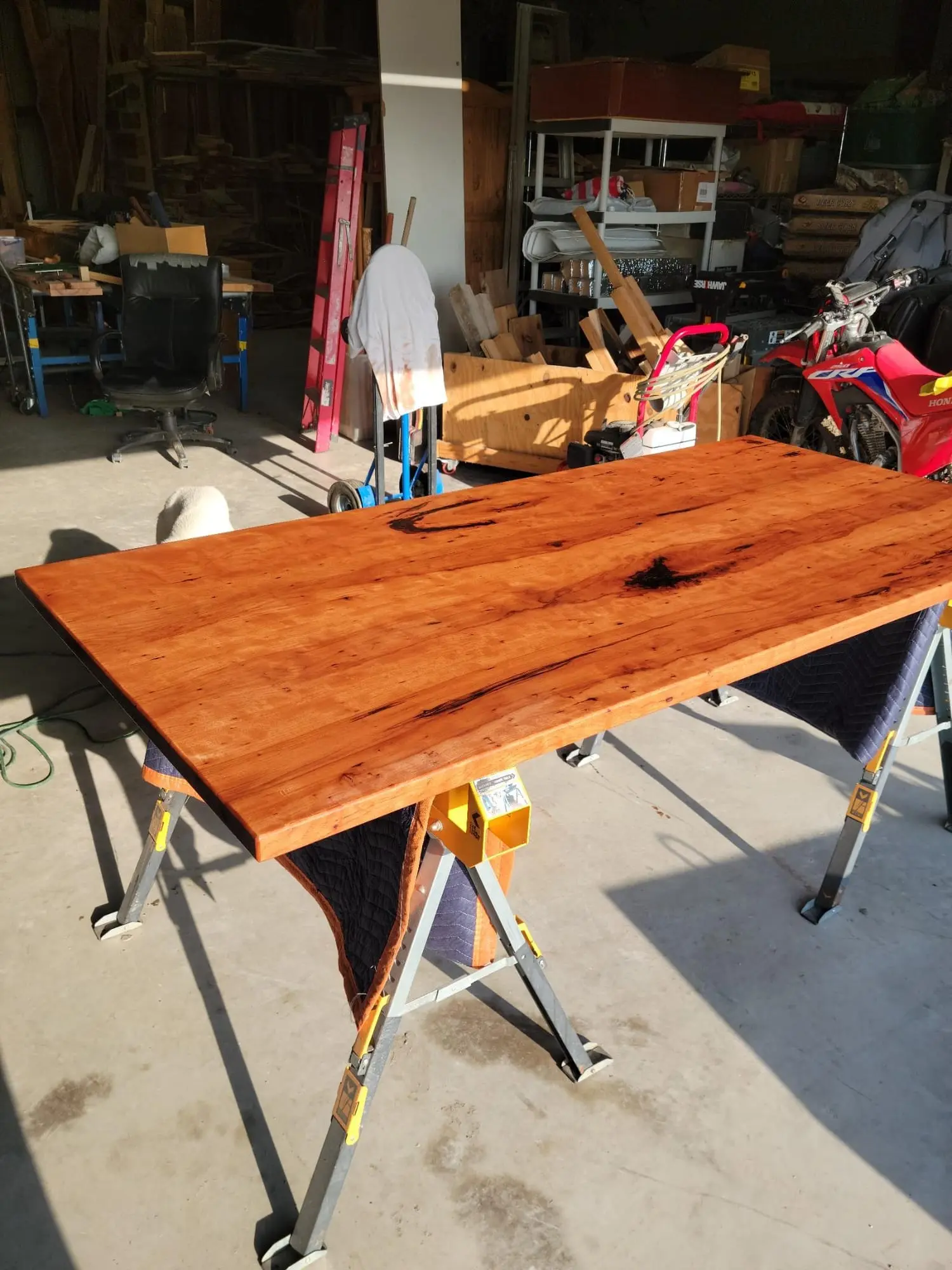
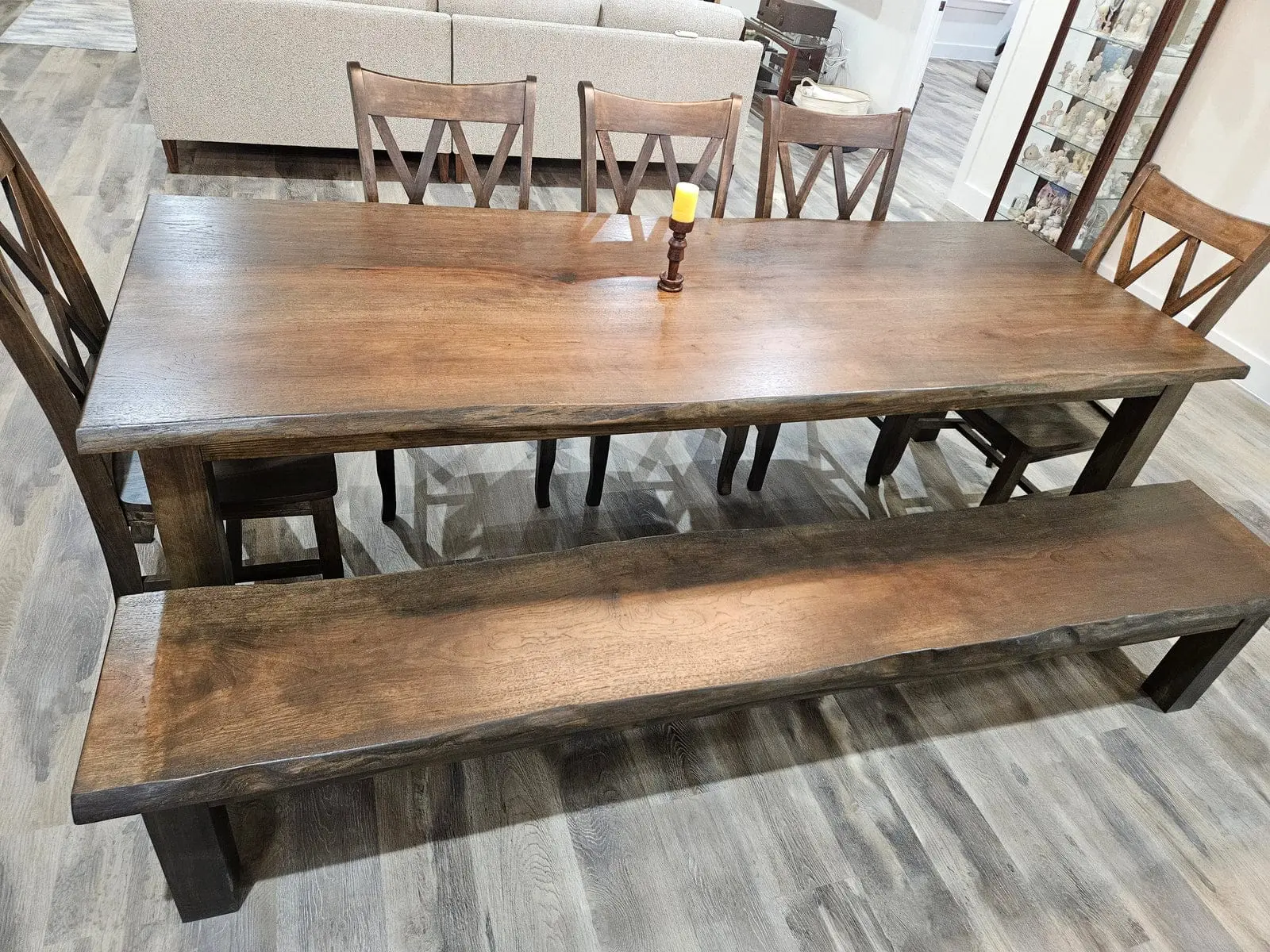
The Bowerman family brought us pecan. Pecan is a Texas tree in the truest sense, and it is a stubborn one to dry. It came out of the kiln with that warm gold to caramel color it gets, and it went together as a live edge dining table where the natural edge of the tree is still the edge of the table. You can put your hand on the side of that table and feel where the bark was.
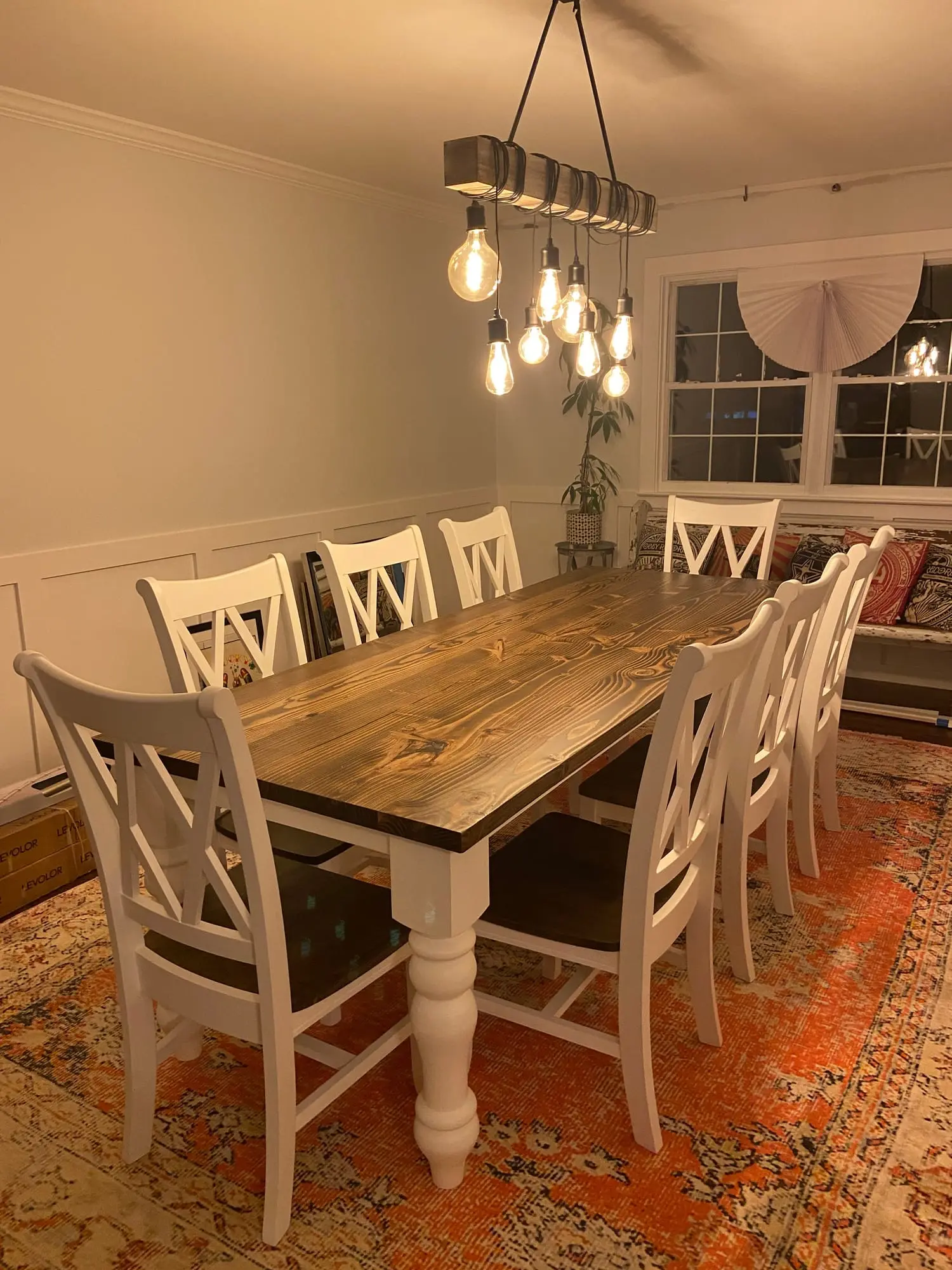
The Keahey family turned into three pieces instead of one, which happens more than you would think. Once a family sees the lumber stacked up and realizes how much a single good tree yields, the conversation changes. An oval table for Kaytricia. A table for Mark. A sofa table for Carol. Same tree, three households, one family. That is the whole idea in one sentence.
The Cowley Legacy Table is the one we point people to when they ask what all the fuss is about. It is a table. It also is not.
What makes a tree a good candidate
- Diameter. Bigger is better. Under about 16 inches through the trunk and the yield gets thin fast.
- Species. Oak, pecan, walnut, elm, hackberry, sycamore, mesquite. Most Texas hardwoods will make something. Fast-growing softwoods and ornamentals generally will not.
- Soundness. Some heart rot is workable and can even be beautiful. A hollow trunk is not.
- Straightness. Sweep and crook cost you yield, though a big crotch section can be the prettiest thing in the whole log.
If you are not sure, take pictures. Get the whole tree in one, then a close-up of the trunk at chest height with something in frame for scale. Email them to hello@sawwwmill.com or call 972-837-6974 and we will tell you honestly what you have.
Why we do these
There is a line in Ecclesiastes about a man enjoying the work of his hands, and we think about it a lot out here.
A tree that stood on your land for a hundred years did not ask for anything. It shaded a yard, dropped pecans, held a rope swing, and got photographed at graduations without anybody meaning to photograph it.
Turning it into a table your grandkids eat at is not sentimentality. It is just refusing to waste something good.
We are at 4882 CR 3735 in Wolfe City, Monday through Friday 8 to 5, weekends by appointment. Bring your pictures.
While you are here
Every piece we build is made to order in your size, species, and finish, and every board in it was milled and dried here in Wolfe City. Build time runs 4–10 weeks.