Red Oak, Black Walnut, or Hard Maple: How to Choose
Three hardwoods, three very different tables. A plain comparison of color, grain, hardness, how each takes stain, and who each one is really for.
July 15, 2026 · 8 min read
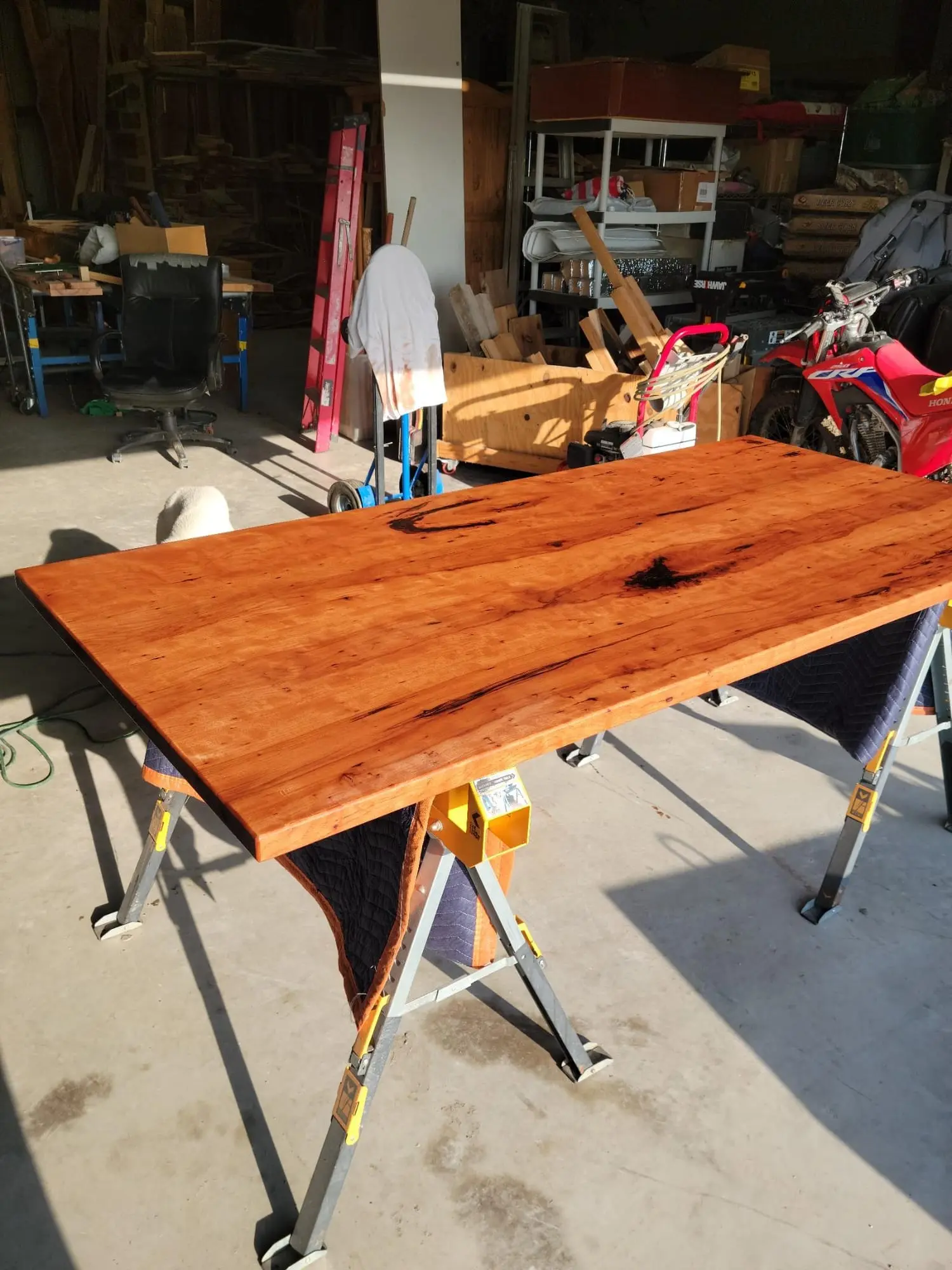
People walk into the showroom knowing they want a dining table and having no idea what species they want it in. That is normal. Nobody has this conversation more than once or twice in a lifetime.
Here is how we walk through it, in plain terms.
We build primarily in three premium hardwoods: Red Oak, Black Walnut, and Hard Maple. Each one makes a fine table. They are not interchangeable.
Red Oak
Red Oak is our standard, and standard is not an insult. It is the most furniture we build, and there are good reasons.
What it looks like. Strong, open, unmistakable grain. Big cathedral arches on the flatsawn boards. The bare wood has a rose or pinkish undertone, warmer than White Oak, which runs more olive and tan.
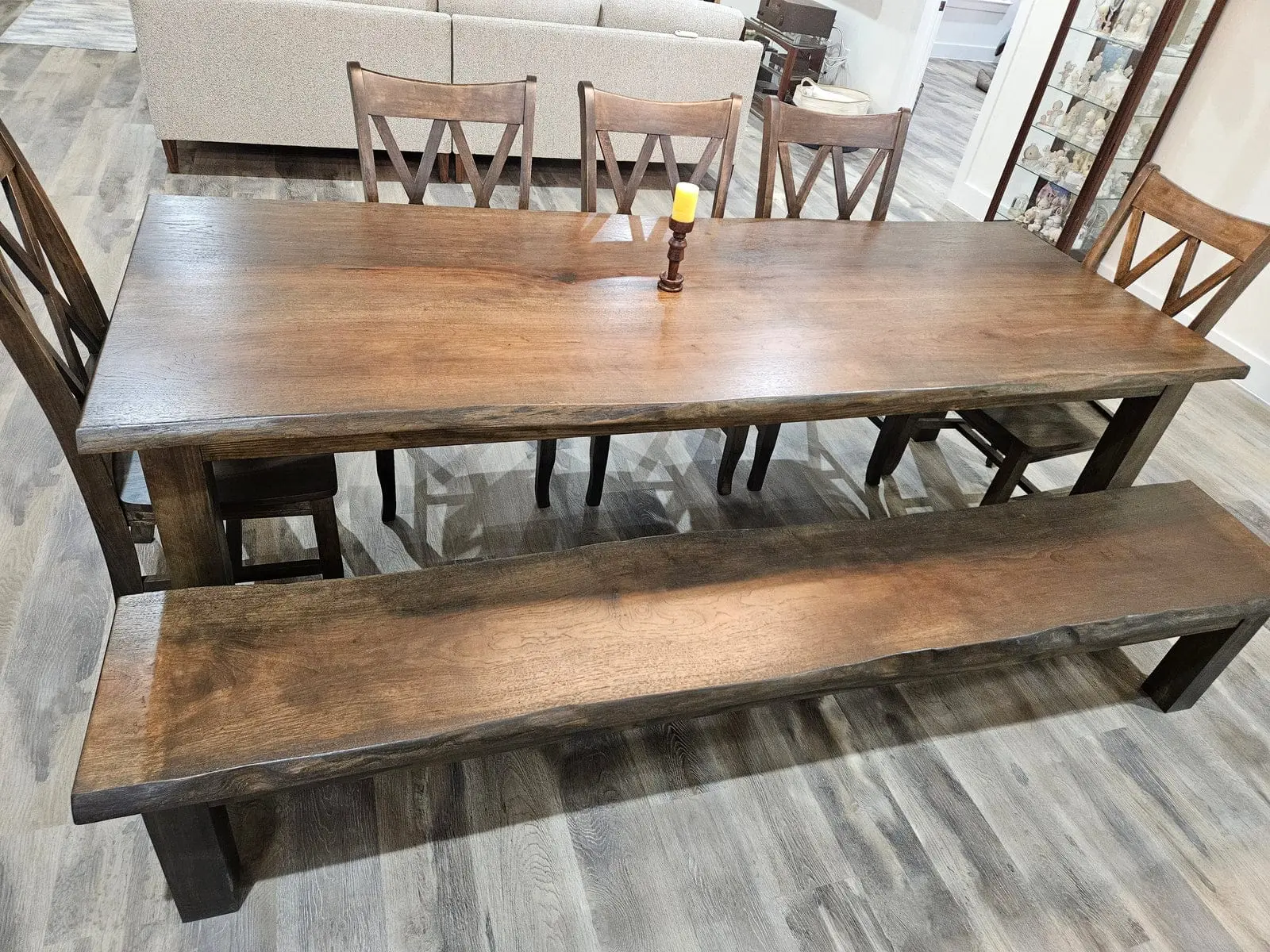
How it takes finish. Beautifully, and this is Red Oak's superpower. The grain is open and porous, so dark stains sink down into it and pool in the grain lines. You get contrast. A dark walnut-toned stain on Red Oak reads deep and rich in a way that a tight-grained wood simply cannot match. If you want a dark table without paying walnut prices, Red Oak stained dark is the honest answer.
How it holds up. Hard, tough, and forgiving. It has been the American kitchen table wood for generations for a reason.
Who it is for. Someone who wants visible, obvious wood grain. Someone who wants a range of stain colors to choose from. Someone building a big table on a real budget. Farmhouse and traditional styles live here.
The honest downside. That open grain catches crumbs and shows every ring if you neglect the finish. And if you want a light, subtle, modern top, Red Oak's loud grain will fight you.
Black Walnut
Walnut is the one people fall in love with standing in the shop, before they ask the price.
What it looks like. Chocolate brown to purplish brown heartwood, sometimes with streaks of gray and a pale cream sapwood at the edges. Tight, fine grain with quiet figure. It does not need stain. It never needs stain. Staining walnut is like salting a good steak before you taste it.
How it behaves. Dense, hard, and tight-grained. It machines clean, holds a crisp edge on a chamfer, and takes a hand-rubbed oil finish like nothing else we work with.
One thing to know. Walnut lightens with age and sunlight. This surprises people, because most woods darken. A walnut table by a big south-facing window will mellow toward a warmer, lighter brown over a few years. Most folks like where it ends up. Rotate your centerpiece and table runner occasionally so it lightens evenly.
Who it is for. Someone who wants dark wood that is actually dark all the way through, not stained on the surface. Someone drawn to modern, mid-century, or live edge work. Someone willing to pay for it.
The honest downside. Price. Walnut is the most expensive of the three by a wide margin, and big clear walnut slabs are expensive on top of that. It also has a real color difference between heartwood and sapwood, which we can either avoid or feature depending on what you want.
Hard Maple
Maple is the quiet one, and it is the one people underrate.
What it looks like. Creamy off-white to pale blond, smooth, with minimal grain pattern. Nearly uniform. Some boards show figure, curl or birdseye, and when they do it is spectacular, but the everyday character of maple is calm.
How it behaves. Very hard. Harder than Red Oak on the Janka scale and noticeably denser underfoot and under a knife. This is why it is the traditional butcher block and bowling alley wood. The closed grain means fewer places for food and bacteria to hide, which is why we build most of our butcher block countertops in it.
How it takes stain. Poorly, and we will say that plainly. Hard Maple is dense and the pores are tight, so stain does not penetrate evenly. It blotches. There are ways around it with conditioners and dyes, but our advice is simple: if you want a dark table, do not buy maple and stain it. Buy walnut, or buy oak and stain it. Buy maple because you want a light table.
Who it is for. Someone who wants a bright room. Someone with a modern or Scandinavian-leaning kitchen. Someone who wants maximum durability in a work surface. Anyone buying butcher block or a cutting board.
The honest downside. It shows everything on a light surface, particularly stains from red wine and turmeric. And a clear-coated maple top will amber slightly over the years.
Quick comparison
- Darkest without stain: Black Walnut
- Best with dark stain: Red Oak
- Lightest and brightest: Hard Maple
- Hardest: Hard Maple, then Red Oak, then Black Walnut
- Loudest grain: Red Oak
- Quietest grain: Hard Maple
- Most expensive: Black Walnut
- Best value: Red Oak
What we actually tell people
Bring a picture of your room. Bring a cabinet door or a floor sample if you can, or a good photo in daylight.
The most common mistake we see is matching too hard. A dining table does not need to match your floors or your cabinets exactly, and when it almost matches and misses, it looks like a mistake. Either match closely on purpose or contrast clearly on purpose. The near miss is the only bad outcome.
The second most common mistake is choosing from a phone screen. Wood color on a screen is a guess. Come stand in front of the real thing.
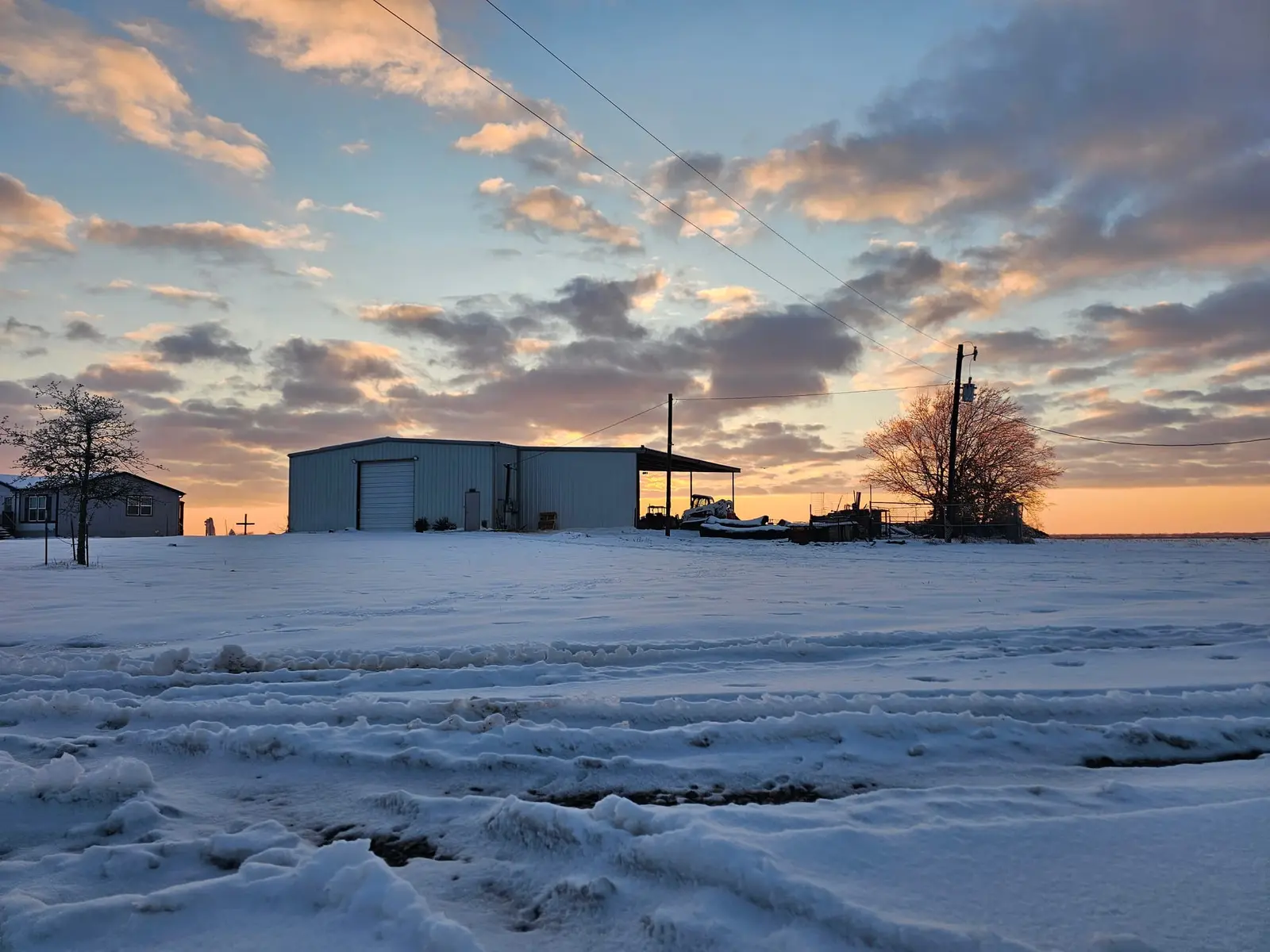
We are at 4882 CR 3735, Wolfe City, TX, about an hour and fifteen minutes from Dallas. Monday through Friday 8 to 5, weekends by appointment, 972-837-6974. We will pull samples and let you take them home.
While you are here
Every piece we build is made to order in your size, species, and finish, and every board in it was milled and dried here in Wolfe City. Build time runs 4–10 weeks.