Mass-Produced vs Handcrafted: What You Are Actually Paying For
Veneer over MDF, cam locks, and a five-year lifespan versus solid hardwood and real joinery. A straight comparison of what the price difference buys.
April 9, 2026 · 8 min read
Somebody stood in our showroom last spring and said what a lot of people are thinking. "I can get a farmhouse table online for six hundred dollars. Talk me into yours."
Fair question. Here is the answer we gave him.
What is under the finish
The single biggest difference is not craftsmanship. It is material.
A mass-market dining table is usually MDF or particleboard with a veneer on top. Medium density fiberboard is wood fiber and glue pressed into a sheet. Particleboard is coarser chips of the same idea. The veneer over it might be a thin slice of real wood, sometimes as thin as a sheet of paper, or it might be a printed paper or vinyl laminate with a photograph of wood grain on it.
It looks convincing when it is new. Some of it looks very convincing.
Here is what happens over time:
- You cannot sand it. A real wood veneer on a factory table runs maybe 0.6mm or thinner. One aggressive sanding goes through it and you are looking at brown fiber. A solid hardwood top can be sanded and refinished multiple times over decades.
- Water is fatal. A spill that sits on a chipped edge or an unsealed underside wicks into the MDF and the fiber swells. It never goes back down. You get a permanent bubble or a soft, crumbling edge.
- It cannot hold a screw twice. Particleboard strips out. Once a leg bracket loosens and you tighten it, the screw threads are chewing through glue and chips.
- Weight is not strength. MDF is heavy, which makes these tables feel substantial in the store. It is dense, not strong.
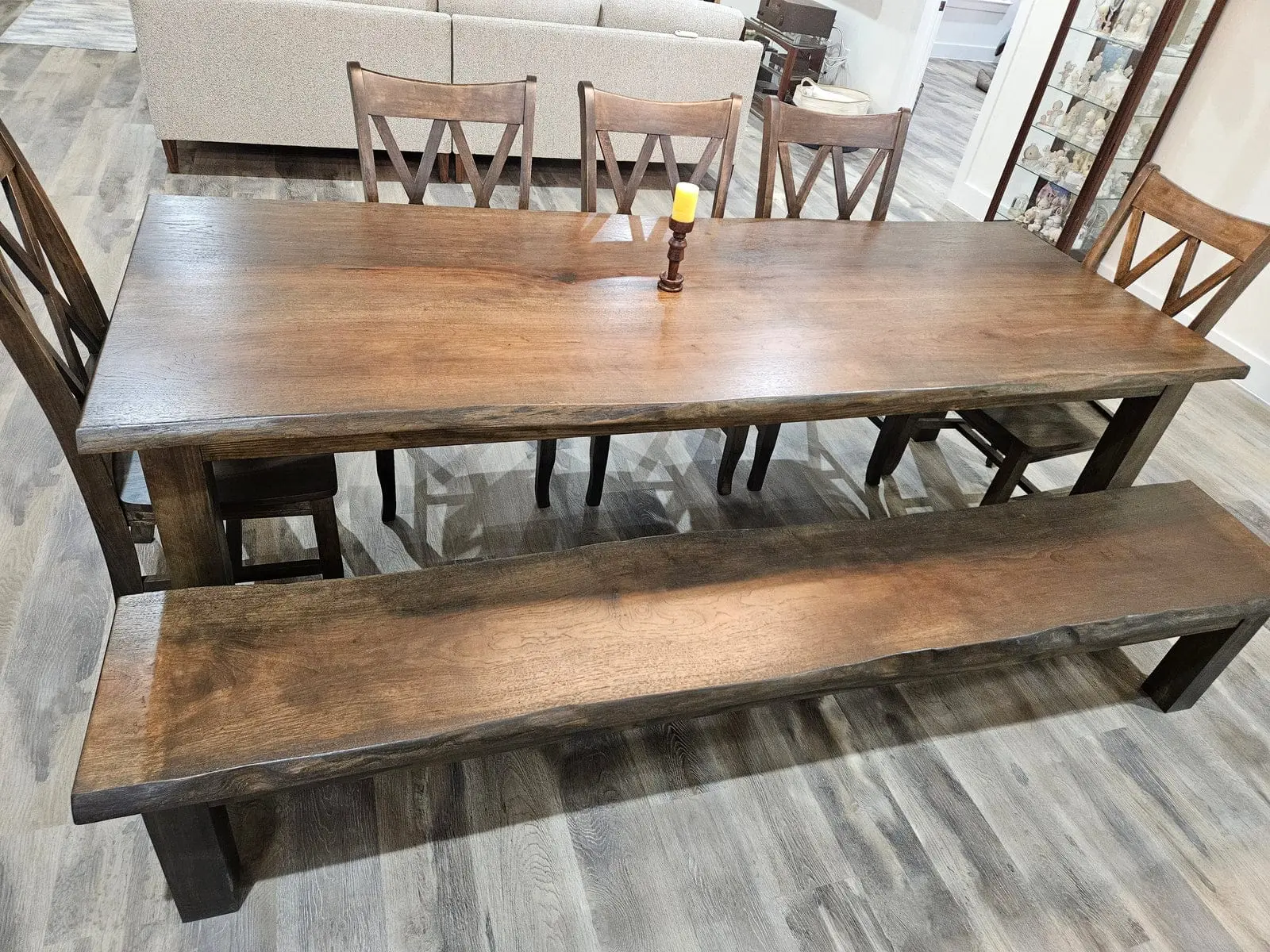
Our tables are solid hardwood all the way through. Red Oak, Black Walnut, or Hard Maple, milled on our own sawmill and dried in our own vacuum kiln. If you sand through the surface you find more of the same wood. In thirty years somebody can strip it and start over.
How it is held together
The second difference is joinery.
Flat-pack and most imported furniture is assembled with cam locks and dowels, sometimes just screws into end grain. Cam locks are the little metal discs you turn with the included hex key. They are a genuinely clever invention for shipping furniture in a flat box, and they are not a long-term structural joint. They work loose. Wood movement around a metal fastener in particleboard only goes one direction, and that is looser.
Traditional joinery does something different. A mortise and tenon puts a tongue of one piece inside a socket in the other, with long grain glued to long grain. Modern wood glue in a long grain joint is genuinely stronger than the wood around it. Break that joint and the wood fails before the glue does.
The other thing real joinery does is account for movement. Our tabletops are attached to their bases with fasteners that let the top slide across its width as the seasons change, because a 42 inch wide top will change a quarter inch between August and January. Glue a top down solid and you have not stopped the movement, you have just chosen where it splits.
The math on lifespan
This is where the conversation usually turns.
A six hundred dollar table that lasts five to seven years, replaced four times, is 2,400 to 3,000 dollars over thirty years. Plus four rounds of shopping, four deliveries, and four old tables hauled to the curb.
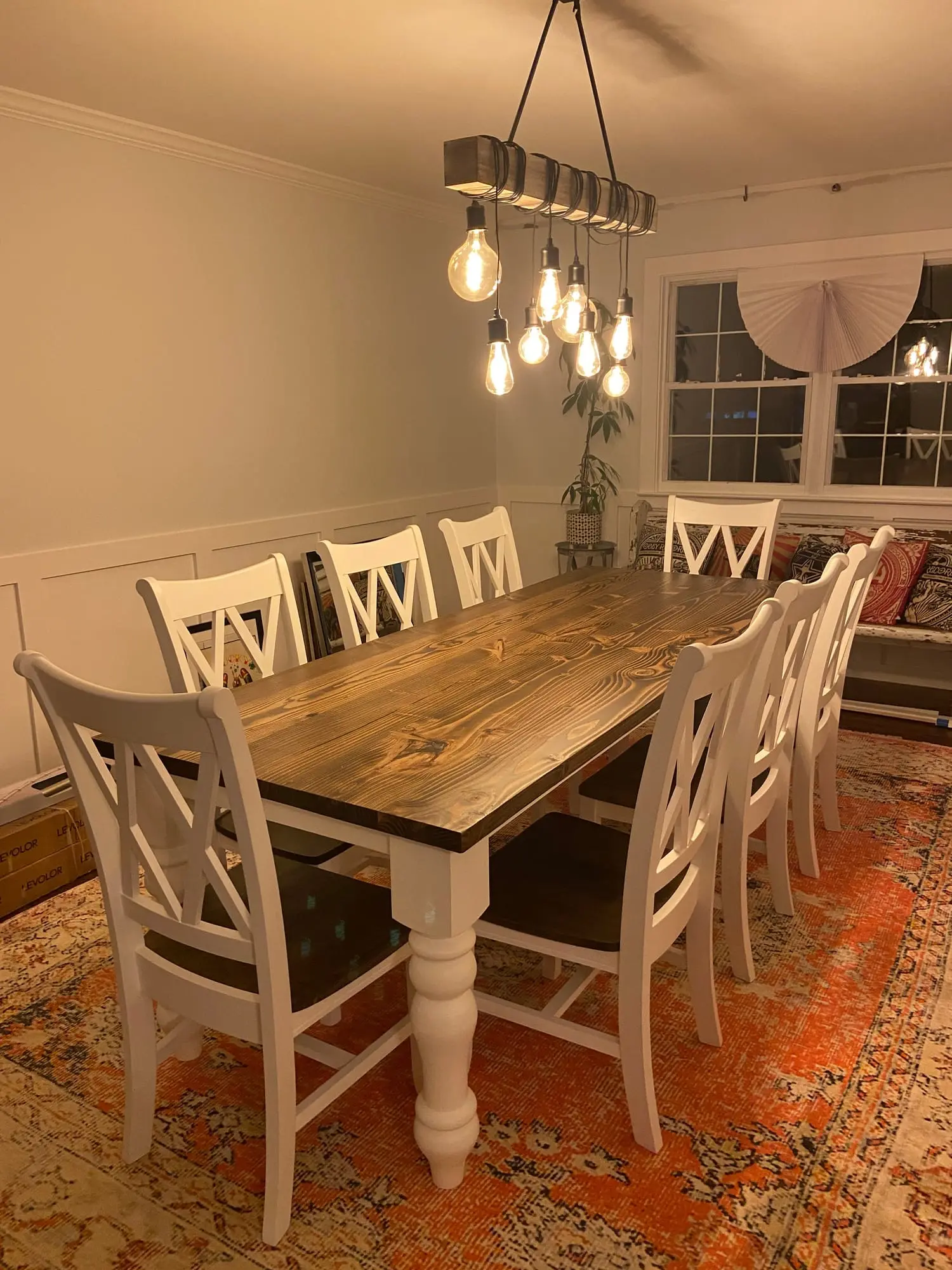
A handcrafted solid hardwood table costs more once. It gets refinished maybe twice in that span. At the end of thirty years it is worth something, and more to the point, somebody in your family wants it.
The cheap table is not actually cheaper. It is just cheaper this month.
We are not going to pretend that is always the deciding factor. If you are furnishing a first apartment or a rental, buy the inexpensive table and do not feel bad about it. We mean that. There is a right time for a piece like ours and it is not every time.
What the price actually covers
When you buy from us, here is where the money goes:
- Lumber we milled ourselves. We fell, saw, sticker, and vacuum kiln dry our own hardwood right here in Wolfe City. That is weeks of kiln time and years of equipment before a board is ready.
- Two people's hands. Daniel and Owen. Owen brings better than ten years in construction to how these things are built. Daniel has been at the woodworking side for over a decade.
- Time. A custom table runs 4 to 10 weeks. Nobody is optimizing that to four minutes of robot time.
- Grain selection. We choose which board goes where, how the grain runs across a top, and where a knot lands. A factory does not look at a board. It feeds a stack.
- Someone to call. We answer at 972-837-6974. There is no ticket number.
What you should ask any furniture seller
Take these questions anywhere, including to us.
- Is the top solid hardwood or veneer over a composite core? If veneer, how thick?
- What species, specifically? "Hardwood" and "acacia" and "solid wood" can mean almost anything.
- How is the base joined? Mortise and tenon, dowels, or cam locks?
- How is the top attached, and does that allow for seasonal movement?
- What is the finish, and can it be repaired in place or does it require full refinishing?
- If something fails in year three, who do I call?
An honest seller will answer all six without flinching. If the answers get vague around question one, you have learned what you needed to know.
Come look at the difference
Photographs cannot show you this. Weight, edge, joint, and the way a real wood surface reflects light are things you have to be standing in front of.
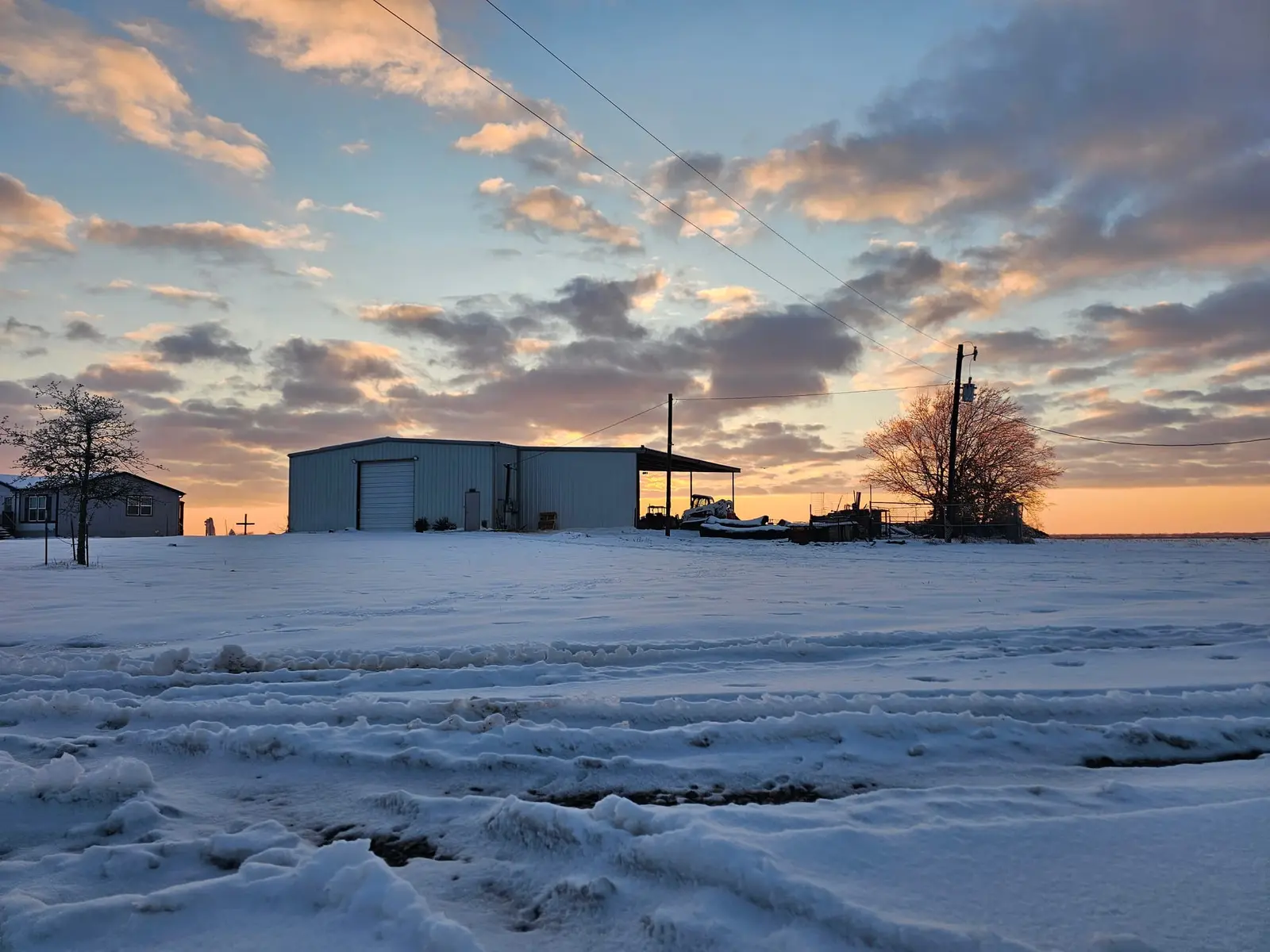
We are at 4882 CR 3735 in Wolfe City, about an hour and fifteen minutes from Dallas, open Monday through Friday 8 to 5 and weekends by appointment. Turn one of our tables over and look underneath. That is where the truth is on any piece of furniture.
While you are here
Every piece we build is made to order in your size, species, and finish, and every board in it was milled and dried here in Wolfe City. Build time runs 4–10 weeks.